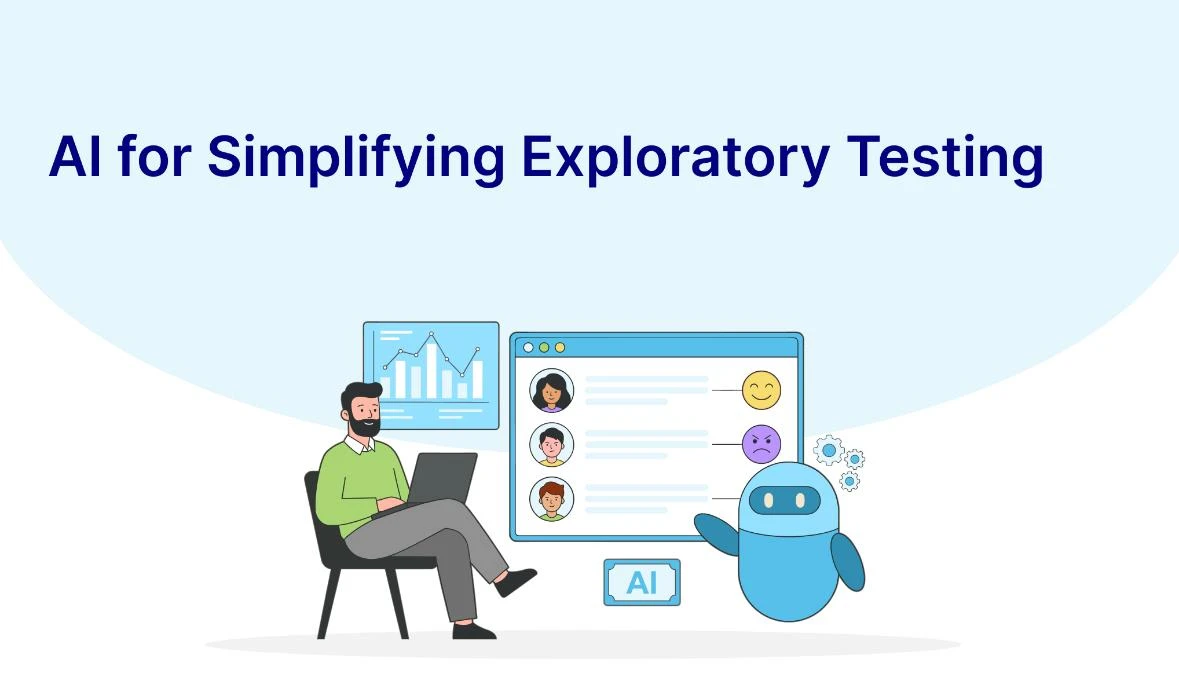
Exploratory testing has evolved beyond just being manual. It now exists as an engineering discipline with the assistance of artificial intelligence (AI). Applications today are far too complex in terms of how they operate – think about how distributed environments work, asynchronous APIs interact, cloud in how software and/or code gets shipped continuously into production.
Because of this, traditional means of performing exploratory tests simply won’t give a real understanding of how a software product behaves. Using AI introduces a new era in exploratory testing. We can now automate the creation of smart workflows at the time of execution, identify flaky behaviour, explore telemetry, find hard to identify edge cases, and automatically explore a software application’s states while building out test cases against each of these features.
This paper will provide an overview of how engineering teams are designing, architecting and using AI based exploratory testing techniques in their production environments.
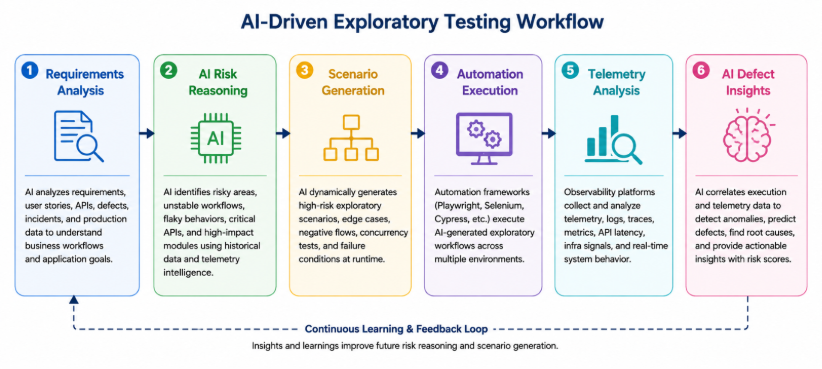
AI-Driven Exploratory Testing Workflow
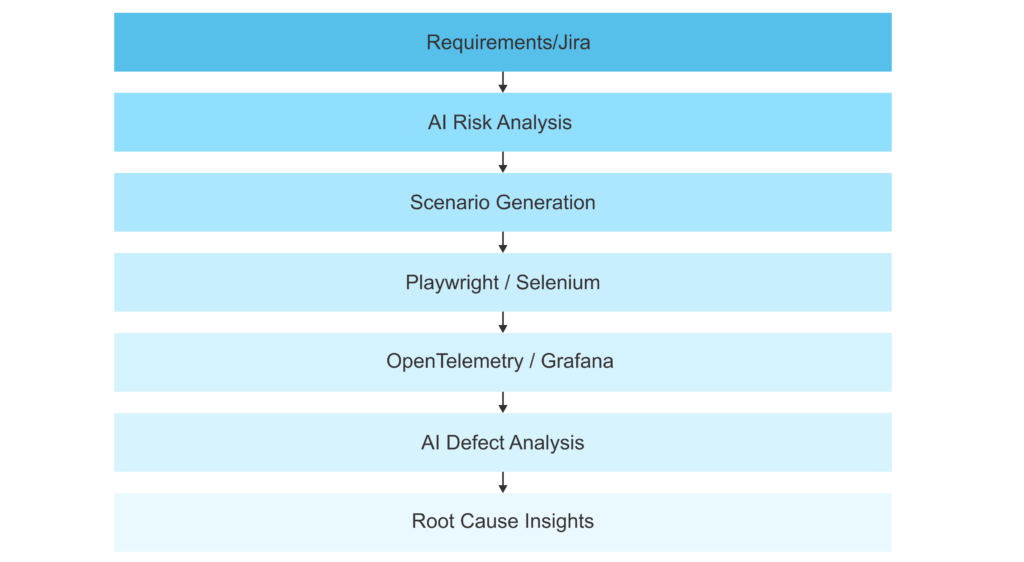
AI-powered exploratory testing platforms today usually perform an analysis of the requirements, as well as any previous defect, incident, or production data associated with the application being tested, prior to executing exploratory scenarios. AI-powered exploratory testing platforms generate high-risk exploratory scenarios dynamically instead of using only pre-defined static test cases, like traditional automated frameworks. The automation framework executes the workflow while the observability framework monitors real-time behaviour. The AI then correlates the telemetry from both frameworks and generates insights into defects and produces a risk analysis.
Semantic Workflow Understanding
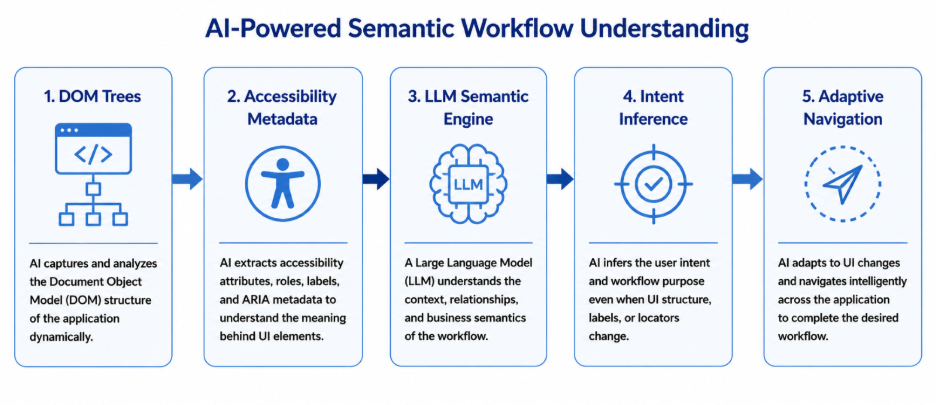
Traditional automated frameworks rely heavily on selectors and locators, whereas AI-based frameworks perform semantic reasoning techniques to gain an understanding of the intent of the workflow and the business meaning behind it. The ability of AI platforms to recognise a workflow, even when the UI structure has changed, is made possible by their use of Large Language Models (LLMs), accessibility metadata, DOM analysis, and contextual telemetry.
Observability-Driven Exploratory Testing
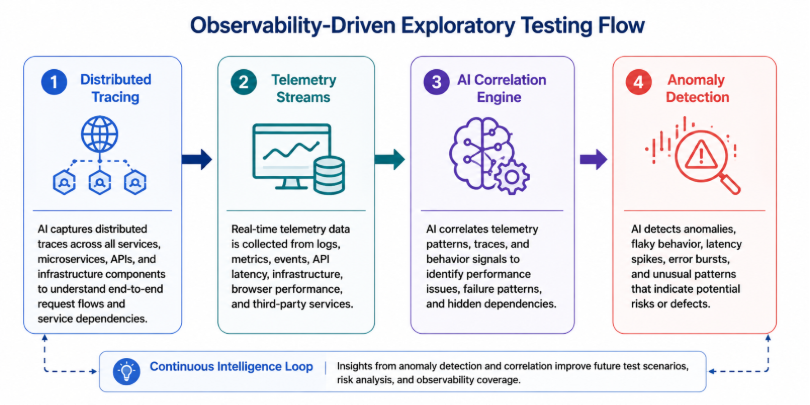
One of the cutting-edge AI exploratory testing approaches that are available today is an approach called observability-driven validation. As AI executes tests in an exploratory manner, it constantly monitors for distributed traces, API latency, instability in infrastructure, browser-rendering performance, and asynchronous service communications. This allows teams to discover failures that traditional UI testing would never uncover.
AI Exploratory Testing Setup
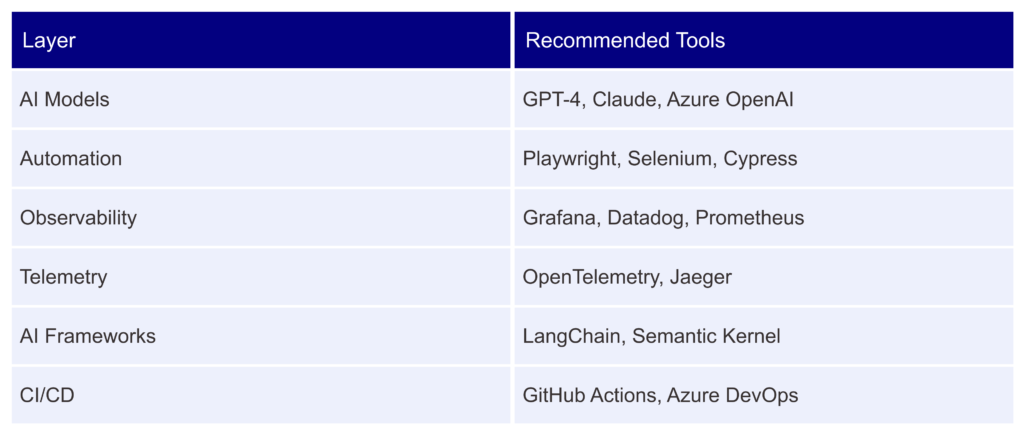
Typically speaking, organizations utilize the same structure for building their own AI model (GPT, Claude, etc) with Playwright or Selenium as Automation Frameworks, Observability Platforms and Telemetry Pipelines. Therefore, AI systems produce Exploratory Scenarios that are executed via Automation Frameworks and then Observability Engines collect runtime intelligence.
Recommended Tools and Technologies
Real-Time Scenario Example — AI-Driven Exploratory Testing in an E-Commerce Payment System
Think about an engineering group working on the testing of an e-commerce checkout app where thousands of payment transactions are processed in real time every hour! The e-commerce checkout app is in a distributed microservice architecture, works with asynchronous payment gateways, is in the cloud, and interacts with several different third-party APIs.
In the past, testers were having to manually verify workflows when products were added to carts, when customers would complete their purchases, and when payments would successfully complete. Even though they verified many workflows, there are still many very critical runtime failures that can exist when they only occur under certain conditions, such as unstable networks, delayed APIs, expired sessions, and deteriorating infrastructure.
When there is an AI-driven exploratory testing, the exploratory workflows are much more intelligent and adaptive to the overall system.
Initially, the AI system will review the following data sets for analysis:
- History of payment defects
- API failure log files
- Production telemetry
- Checkout abandonment reports
- Infrastructure alerts
- User behaviour analytics
Once the analysis is complete, the AI will generate dynamic high-risk exploratory scenarios:
- Interruption in payment during OTP verification
- Expired session during checkout
- Duplicate payment retries
- API timed out during transaction confirmation
- Browser refresh during payment callback
- Slow network impacting cart sync
Once the exploratory workflow has been created/defined, the AI will execute them through automation frameworks such as Playwright or Selenium while observability tools such as Grafana, OpenTelemetry, and Prometheus will monitor:
- API latency
- Distributed traces
- Delayed browser rendering
- Unstable infrastructure
- Failed service dependencies
- Locked database contention
While running, the AI identifies a strange spike in payment API latency, in addition to the sporadic failure of session tokens. By correlating these telemetry signals, the observability engine is able to identify a potential concurrency bug that exists within the payment retry service.
Instead of simply reporting a failed test case, the AI system also provides:
- Probable root cause
- Failure correlation insights
- Risk severity score
- Impacted microservices
- Suggested recovery scenarios
- Additional exploratory paths for validation
This allows for finding more complex runtime defects than would commonly be captured through traditional exploratory testing methods.
Conclusion
Exploratory testing is being drastically reshaped by AI, as it is becoming an adaptive engineering discipline that continuously adapts to current conditions. Modern test environments use semantic reasoning, telemetry intelligence, observability, predictive analytics, and AI-based workflows to increase the quality of software and the level of confidence in the software’s release, rather than solely depending on either manual testing or static testing with automated tests.