Enterprise AI and Generative AI technologies are rapidly transforming how organizations automate workflows, process enterprise data, and improve operational decision-making. Modern enterprises are increasingly adopting cloud-native AI architectures to automate document processing, orchestrate intelligent workflows, and build scalable machine learning systems.
Generative AI systems are now widely used across industries for document intelligence, workflow automation, semantic search, knowledge retrieval, customer support automation, and business process optimization. Successful enterprise AI implementation requires scalable architecture, strong governance, reliable data pipelines, and observability across systems.
Enterprise AI System Architecture
Modern enterprise AI systems typically follow event-driven and cloud-native architectural patterns designed for scalability and operational efficiency.
Common architectural components include:
- Email and document ingestion pipelines
- Event-driven orchestration services
- LLM-based classification and extraction systems
- Async workflow processing engines
- PDF extraction and metadata processing
- Validation and audit tracking services
- Cloud-native storage and orchestration frameworks
These architectures support high-volume enterprise workflows while maintaining scalability, reliability, observability, and compliance.
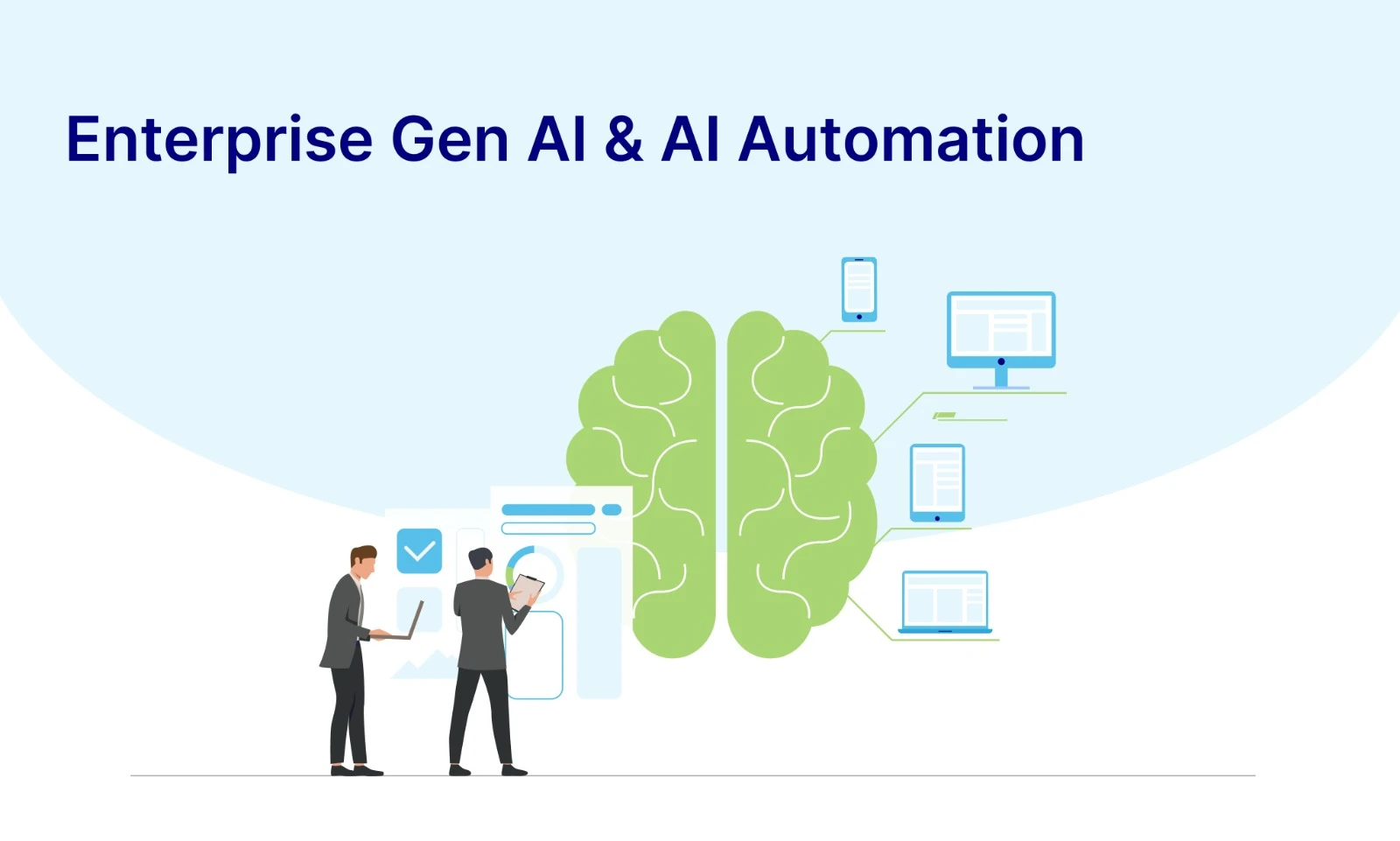
Figure 1: Enterprise AI System Architecture
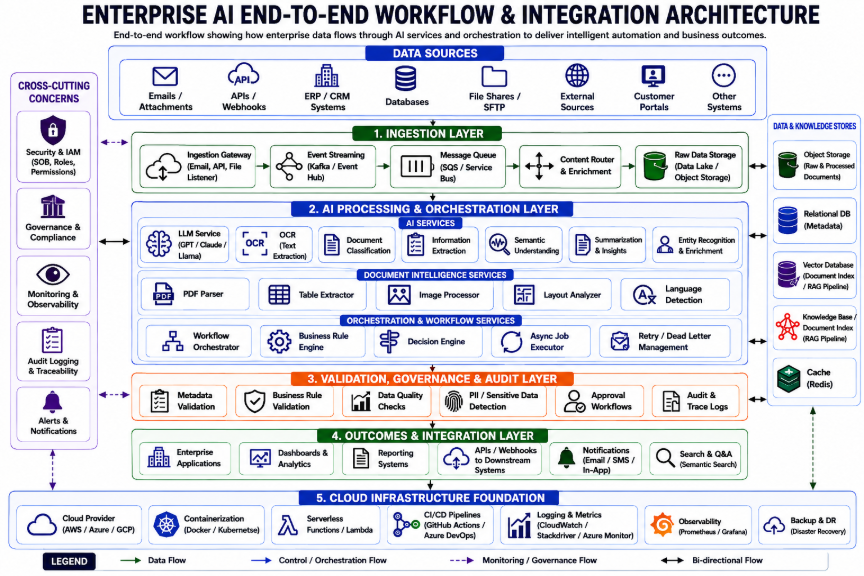
Enterprise AI Workflow Architecture
The workflow architecture demonstrates how enterprise AI systems process documents and business data through multiple intelligent processing layers. Data from enterprise systems, emails, APIs, and external sources is ingested into scalable processing pipelines.
The ingestion layer routes incoming data to LLM-powered AI services responsible for classification, extraction, summarization, and semantic understanding. Workflow orchestration services coordinate downstream processing tasks, validation rules, approvals, and asynchronous job execution.
Validation and audit services ensure governance, compliance, monitoring, and operational observability. Finally, processed outputs are integrated into enterprise business applications, dashboards, analytics systems, and operational workflows.
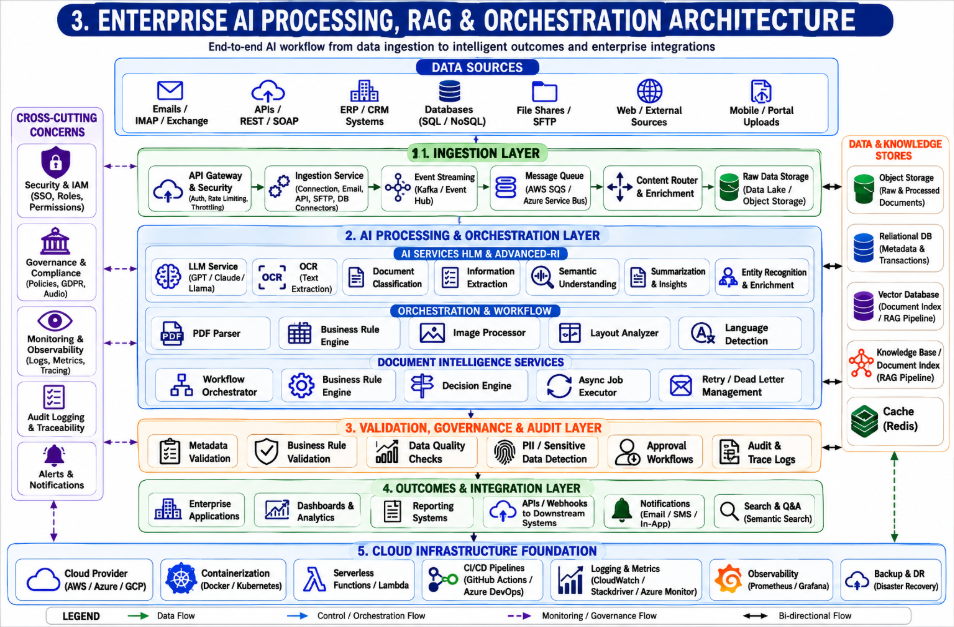
AI-Powered Workflow Automation
Enterprise AI systems are increasingly used to automate business workflows involving document processing, approval management, and operational orchestration.
A common workflow automation system may include:
- Automated ingestion of emails and enterprise documents
- LLM-driven classification and workflow routing
- Extraction of structured data from PDF attachments
- Metadata validation and business rule enforcement
- Workflow orchestration for approvals and downstream processing
- Audit logging and operational tracking
These systems significantly reduce manual effort, improve operational efficiency, and accelerate enterprise business processes.
Retrieval-Augmented Generation (RAG) Systems
Modern enterprises are adopting Retrieval-Augmented Generation (RAG) systems to enable intelligent knowledge retrieval and contextual AI responses.
Enterprise RAG architectures commonly use:
- Vector databases for semantic search
- LLM orchestration frameworks
- Cloud-native AI services
- Document chunking and embedding pipelines
- OCR and document intelligence services
- Secure enterprise knowledge repositories
These systems support use cases such as enterprise search, compliance analysis, policy summarization, document intelligence, and AI-powered assistants.
Data Engineering & MLOps
Scalable AI systems require robust data engineering and MLOps practices to ensure reliability, governance, and operational scalability.
- Key capabilities include:
- Distributed ETL and data transformation pipelines
- Cloud-native data processing workflows
- Data warehouse integration and modeling
- Model deployment and inference orchestration
- Monitoring, logging, and observability frameworks
- Automated CI/CD pipelines for machine learning systems
Strong MLOps foundations improve deployment consistency, scalability, monitoring, and long-term maintainability of enterprise AI solutions.
Conclusion
Enterprise AI is rapidly becoming a core operational capability across industries. Successful implementations require more than powerful models — they depend on scalable architecture, reliable data engineering, governance, observability, and alignment with business objectives.
Modern enterprises are moving toward intelligent automation systems capable of transforming workflows, improving operational efficiency, and enabling data-driven decision-making at scale.